
Fashion - Now 11, 2025
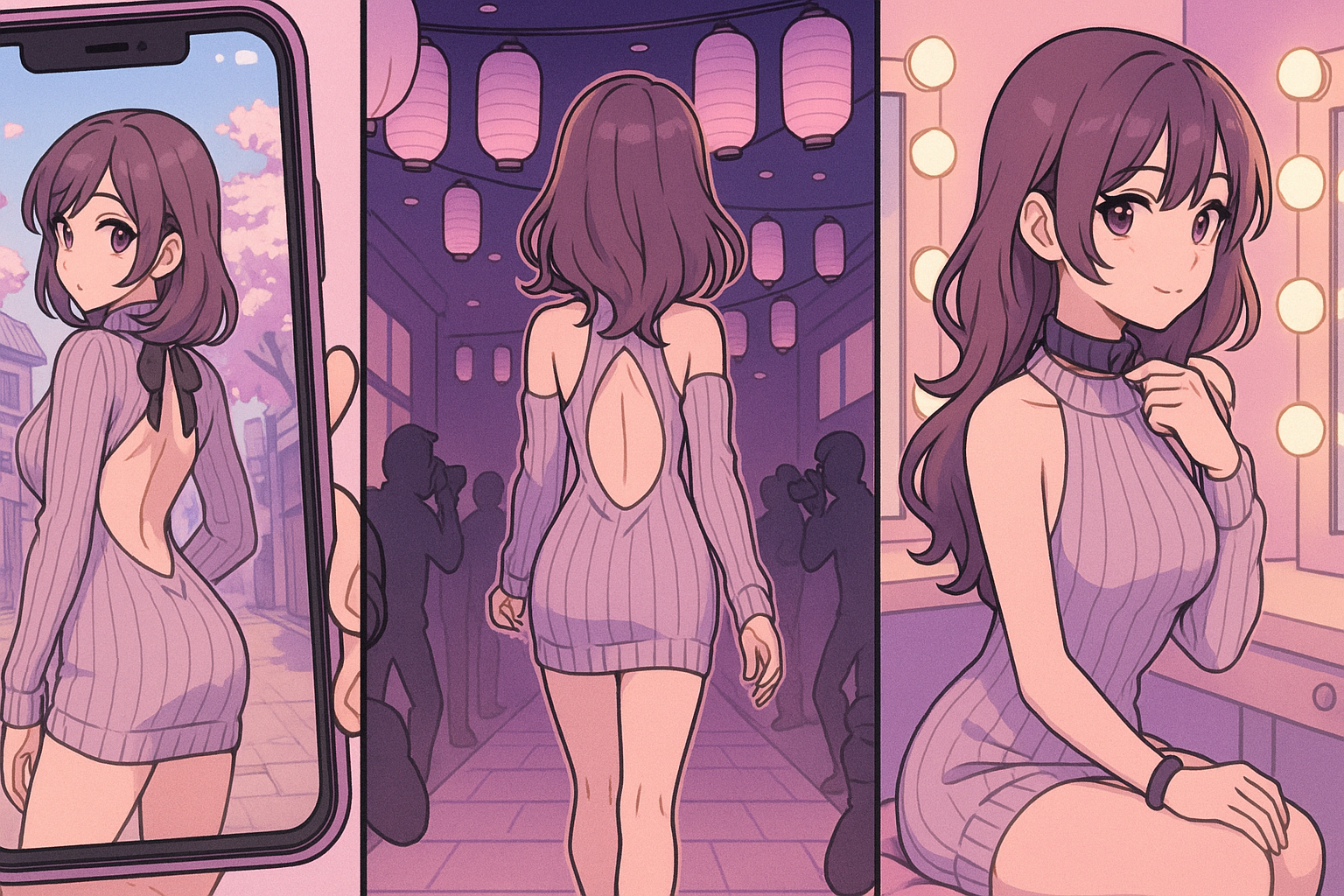
The “virgin killer sweater” (Japanese: 童貞を殺すセーター) moved from a niche visual joke to a durable cultural marker because it compresses a very clear story into one glance. A high collar signals innocence and softness, while the fully open back and side exposure deliver shock and desire. That contrast reads instantly in anime-styled art, in cosplay halls, on streaming thumbnails, and in private couple dynamics. The same clarity also made the look easy to remix: illustrators, models, and designers can shift the focus to chest, back, legs, or hips, and the audience still recognizes the code. The result is a living meme that now includes feminine, masculine, and androgynous bodies, plus digital avatars and game skins, without losing the original signal.
The origin story is unusually well documented. On January 25, 2017, Twitter user @magane4989 posted photos of a halter-neck, dramatically backless knit sourced from a Taobao shop; in four days the post amassed roughly sixty-seven thousand likes and fifty-six thousand retweets. Japanese timelines began calling it the “virgin killing sweater,” and the name stuck. The design’s power in anime-shaped visual culture is its clean signal: a high collar that reads “cute,” a smooth front panel, and a single, uninterrupted oval of exposed back that artists can render clearly from front, three-quarter, and rear views. There is a prehistory worth noting: the broader trope “clothes that kill virgins” (童貞を殺す服) was coined by illustrator Keyholder on July 5, 2015, describing a prim blouse-and-high-waist skirt combination that went viral within seventy-two hours; in July 2016, cosplayer Noraneko’s “sukebe knit” post pushed the open-back knit idea further, setting the stage for the 2017 explosion.
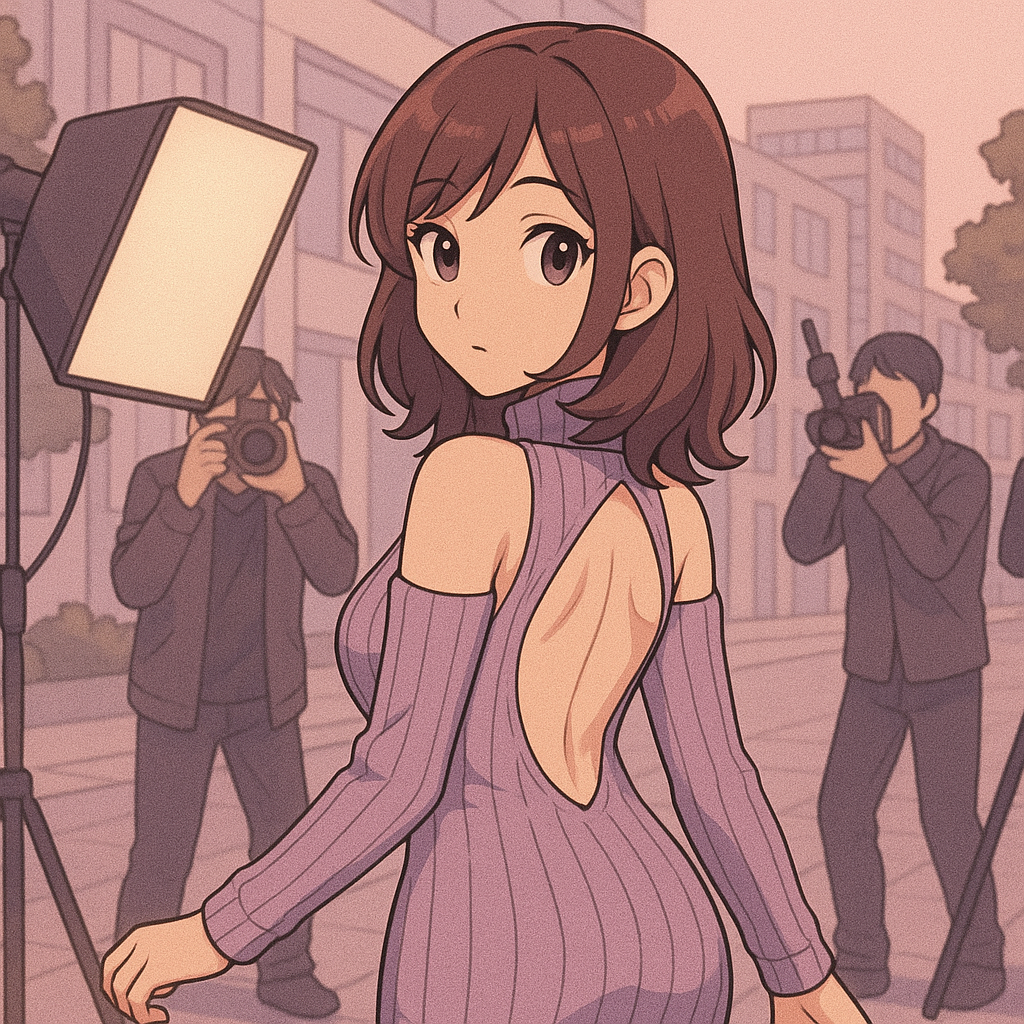
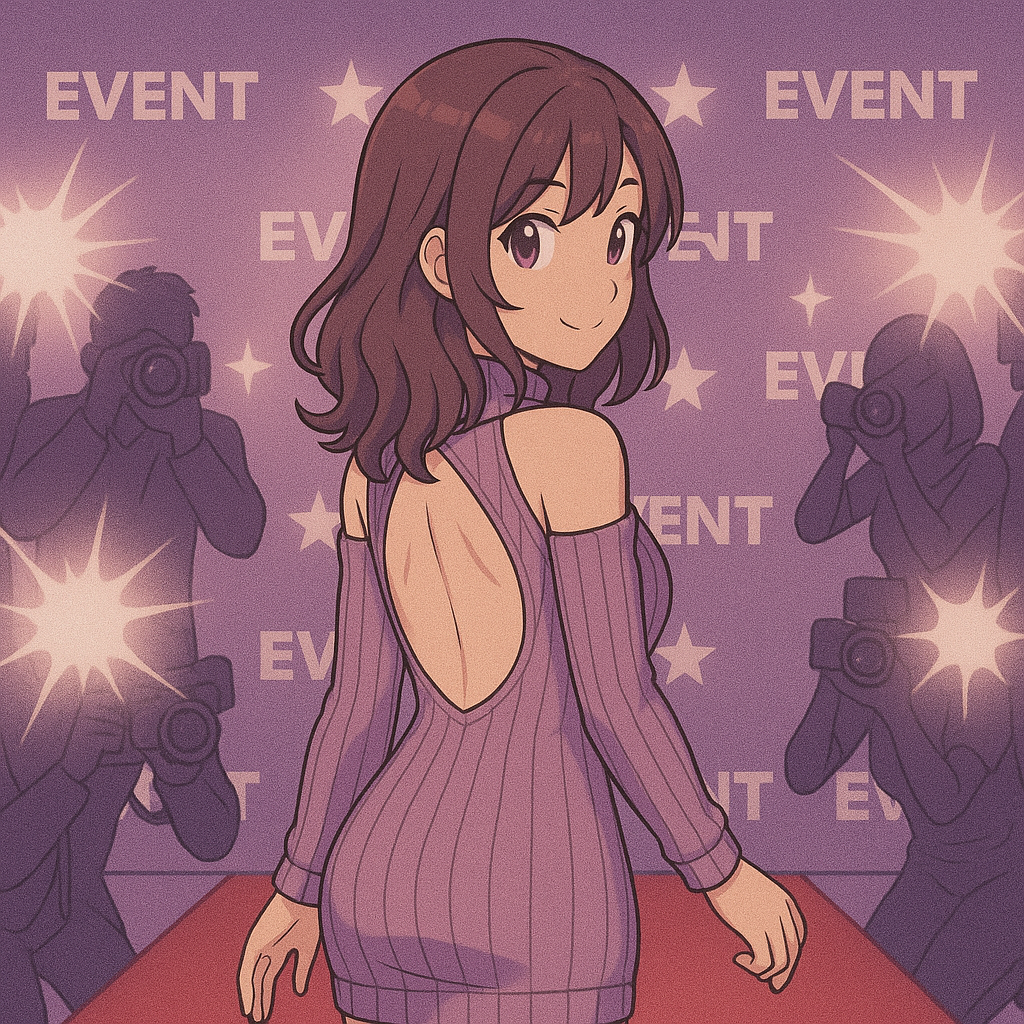
The sweater functions as light cosplay because one garment plus a few cues—over-knee socks, a ribbon choker, a cropped cardigan—can evoke an anime archetype without a full character build. Creators use that low barrier to test audience appetite and then scale into a recognizable theme by repeating colors, hair, makeup shapes, and a pose library over weeks and months. Media coverage in March 2017 showed how quickly the look crossed from feminine bodies to crossplay and male bodies, broadening the meme’s reach at conventions and online. The most effective executions respect platform policies and personal boundaries: faces are framed for approachability while the backline remains clean of straps; sensitive zones are covered with adhesive solutions that do not shift under movement; captions set consent and tone so the audience understands that the person in the image is a performer, not a public good. With repetition and small variations, the garment evolves into a signature and the audience begins to associate the keyword with a specific creator rather than a random listing.
A special sale for new customers from our partners has already begun.
Discount on all items in The Ultimate Destroyer Outfit collection.
Days
Hrs
Mins
Secs
In private, the dress works as a prebuilt fantasy because it offers a character frame without a script. The high collar makes many wearers feel less exposed from the front than in conventional lingerie, while the open back and extreme mini length deliver an unmistakable invitation. Couples use that balance when they want novelty without complicated planning. The wearer controls tempo by choosing when to turn, when to lift hair, and when to step closer, and that control helps shy partners participate. Practical habits borrowed from creators translate well at home: perform a quick movement test video—arms up, twist, sit, walk—to check for collar tugging and side gaps; agree in advance on what, if anything, will be photographed and where it can be shared; prepare adhesive covers, body tape, and a very low micro thong to preserve the clean back line. When the goal is connection rather than proof, warm side lighting, the absence of overhead glare, and steady slow-tempo music do more for atmosphere than props. The garment is a catalyst, not a destination.
“Fashion is instant language.” — Miuccia Prada
Once the visual grammar was established, audiences asked what a masculine or androgynous equivalent would look like. Designers and hobbyists answered with riffs often labeled “virgin destroyer sweater” or “virgin slayer sweater.” These versions keep the high neck or collar but move exposure to the center front or lower sides so that chest and abdominal muscles carry the display. Knitted or cut-out panels notch inward to carve a sharper V, and the fabric stretches across the ribcage rather than across the bust. The same principles apply across bodies: one large uninterrupted area of skin is more powerful than many small cutouts, and a clean silhouette looks stronger than a busy one. People who present as male or non-binary often find that a slightly longer hem and a firmer collar make the design feel intentional rather than comedic. Grooming choices matter as well. A tidy chest or a deliberately shaped trail reads as purposeful, while an unconsidered blend of hair and knit texture can look chaotic on camera. The format has also moved into digital life as three-dimensional meshes for avatars in virtual social spaces and for virtual performer models, allowing play with the fantasy while remaining anonymous. The sweater now exists on bodies and in pixels, which confirms that the meme has become a portable symbol rather than a single garment.
The silhouette has migrated into game modifications and avatar assets, extending the meme into spaces where anonymity, stylization, and repeatability matter. Once a look becomes an asset format, it can be remixed endlessly without new photography, keeping the keyword alive in search and fan economies. Digital adoption also lowers barriers for performers who do not wish to appear in person but still want to communicate the same high-collar and dramatic cutout language through a virtual body.
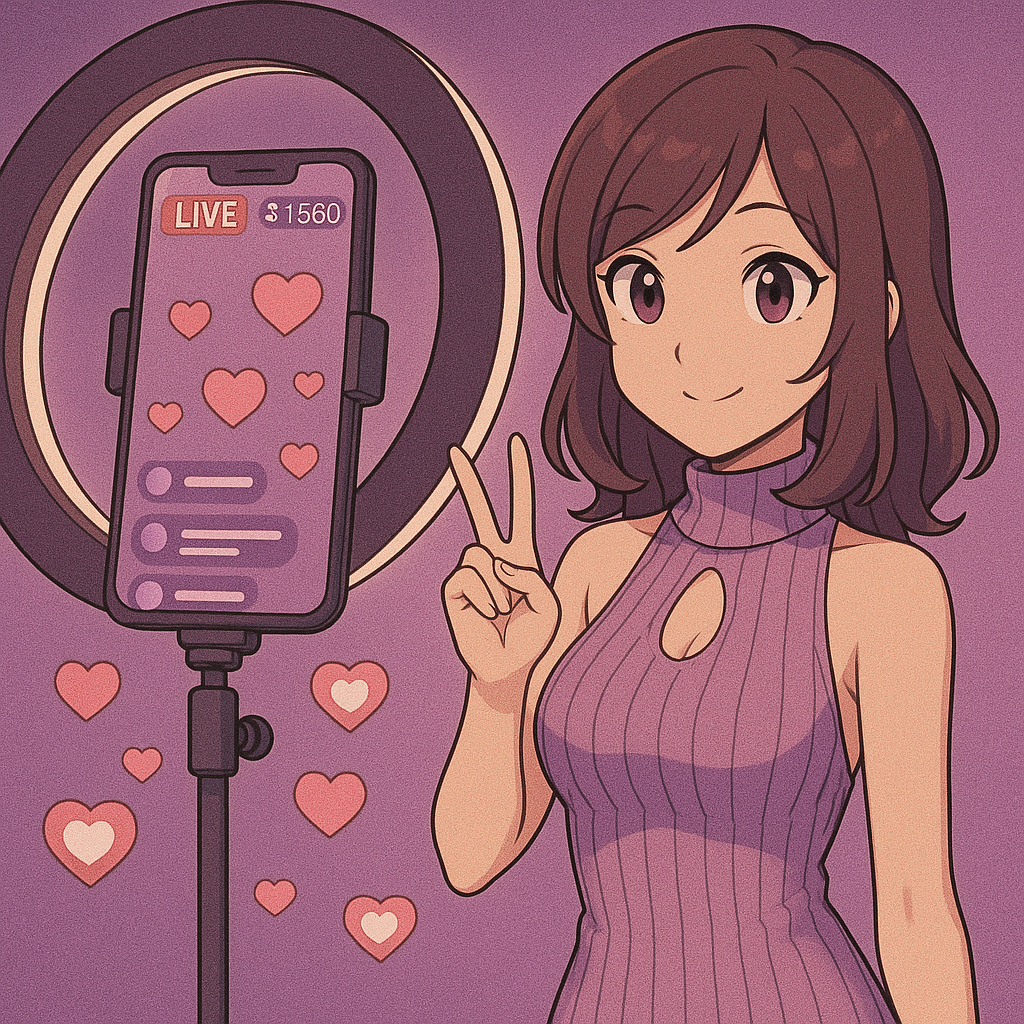
What sustains the meme is not only the garment but also the posting behavior around it. The creators who remain in control plan distribution the same way they plan styling. They set audience age gates where the platform allows it, crop out location clues, and watermark discreetly to mark authorship without covering skin. They decide in advance whether a partner can film, whether friends can share, and whether any behind-the-scenes clip will exist. When publishing, they rotate a small set of signature poses that look strong and safe rather than improvising live. That discipline preserves authenticity by removing panic from the moment. If a copy appears in an unwanted place, a calm request that cites authorship and the desired outcome tends to work better than a public fight. The long game favors people who look professional even when the material is provocative.

I want this to be a thing in America. Please make this a thing in America.
Its become quite the meme and its really popular now. Skimpy cloths are common in America so they'll come. Though the're hard to get now, the marketing and production may go up and I'd be willing to bet they'll be in retail stores in a month or two. This is going to be good (I find them hilarious).
Leave A Comment